A villa portfolio can look healthy in a monthly report while losing margin in the details: a rate adjustment made too late, a maintenance issue repeated across properties, a guest complaint buried in inboxes, or an underperforming listing masked by strong demand elsewhere. Property technology matters because it brings those details into view before they become expensive.
For professional operators, the category is no longer defined by booking calendars or digital checklists alone. The real value is the ability to turn fragmented operational, commercial, and guest data into decisions. That distinction matters most when a portfolio grows beyond the point where a single manager can reliably see every exception.
Property Technology Is Moving Beyond Software
Property technology has traditionally been treated as a collection of tools: property management systems, channel managers, pricing platforms, smart locks, maintenance apps, and guest messaging products. Each solves a real problem. But each can also create another data source, another login, and another version of what is supposedly true.
That model works until complexity rises. A manager with five properties may be able to reconcile systems manually. A hospitality operator managing multiple villas, teams, owners, booking channels, and service partners cannot rely on manual reconciliation without accepting slower decisions and inconsistent execution.
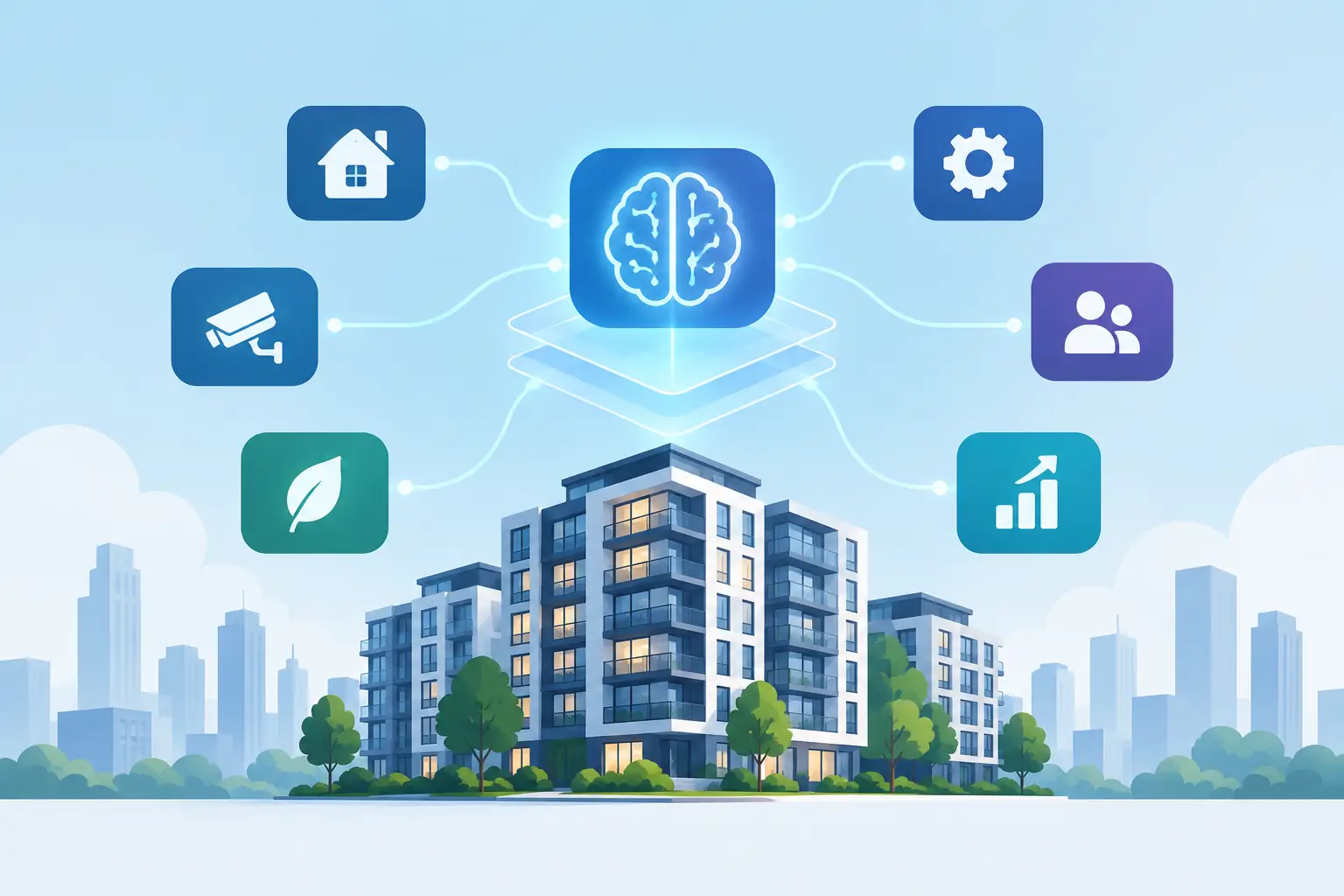
The next stage of property technology is not simply more automation. It is an intelligence layer that interprets what is happening across the portfolio, identifies material changes, and gives teams a prioritized view of where action is needed. Automation handles repeatable tasks. Intelligence helps operators decide which task matters first and why.
What an Effective Property Intelligence Layer Connects
A useful platform does not need to replace every specialist system on day one. It needs to create a reliable operating view from the systems already in use. For vacation rental and villa management businesses, that usually means connecting four critical data layers:
- Commercial performance, including occupancy, booking pace, average daily rate, revenue by channel, cancellations, and owner-level returns.
- Operational execution, including cleaning status, maintenance tickets, vendor activity, turnaround readiness, and unresolved incidents.
- Guest experience, including response times, review themes, recurring service failures, arrival issues, and requests that signal gaps in the stay.
- Portfolio context, including property attributes, seasonality, location patterns, maintenance history, and performance benchmarks across similar assets.
The purpose is not to display more dashboards. Most teams already have access to more reports than they can use. The purpose is to make performance legible across the entire operating model.
For example, a drop in occupancy could be a pricing issue, a listing issue, an availability restriction, or a shift in demand. If the same property also has declining review sentiment and a rising number of maintenance requests, the commercial signal has a different meaning. Connected data prevents teams from treating symptoms as isolated events.
Automation Is Useful. Intelligence Is Strategic.
Automation is valuable when the correct action is known in advance. Send a confirmation after booking. Assign a cleaning task after checkout. Trigger a message when a payment is due. These workflows reduce manual effort and improve consistency.
But many of the highest-value questions in property operations cannot be solved with a fixed rule. Which properties are at risk of missing their revenue target this month? Which maintenance issues are beginning to affect guest satisfaction? Which owner accounts require attention because returns are weakening despite stable occupancy? Where are teams spending time without improving outcomes?
These are interpretation problems. They require context, comparisons, and a clear understanding of what is material to the business. AI can help process signals at a scale that is impractical for a person reviewing disconnected systems, but its value depends on the quality and structure of the underlying data.
That is why a serious property intelligence strategy starts with operational clarity, not feature volume. A platform should make data sources, assumptions, and exceptions visible. If an operator cannot understand why a recommendation was made, it is difficult to trust it with pricing, owner reporting, staffing, or guest recovery.
Where Property Technology Creates Compounding Value
The strongest return from property technology is rarely a single dramatic improvement. It comes from small, repeatable gains that compound across a portfolio.
Revenue management becomes more precise
Revenue teams need more than a market-rate recommendation. They need to understand booking pace, gaps in the calendar, channel mix, lead time, and property-specific demand. A beachfront villa, an urban apartment, and a family-oriented home may respond very differently to the same market movement.
Intelligence allows managers to spot where a pricing decision is needed rather than applying broad adjustments across every listing. It can also expose a common problem in growing portfolios: strong performance in a few high-demand properties obscuring weak execution elsewhere.
Operations become easier to control
Operational visibility is especially valuable in high-touch stays. A missed inspection, delayed repair, or incomplete pre-arrival setup can affect a guest experience worth thousands of dollars. When tasks, issues, and handoffs are dispersed across chat threads and spreadsheets, managers spend their day chasing status rather than managing outcomes.
A centralized intelligence layer gives operators a live view of exceptions. The goal is not to monitor every activity. It is to identify the properties and workflows that need intervention before the next arrival, before a negative review, or before a minor issue turns into a costly repair.
Owner communication becomes more credible
Owners do not need a stream of raw metrics. They need an explanation of performance, a clear view of what is being managed, and confidence that issues are being addressed. Better data supports better conversations about revenue, expenses, maintenance priorities, and future investment.
For managers, this also creates a more defensible operating model. Decisions can be tied to evidence rather than intuition alone. That matters when discussing rate strategy, renovation timing, or why one property requires more attention than another.
Choosing Property Technology for a Real Operating Model
The right platform depends on portfolio size, asset type, market complexity, and the systems already in place. A small operator may prioritize consolidation and daily workflow control. A larger hospitality group may need role-based visibility, portfolio benchmarking, and more sophisticated reporting across markets.
The key question is not whether a product has the longest feature list. It is whether it improves the decisions your team makes every week. If a new tool creates another isolated workflow, it may add effort even when its individual features are useful.
Decision-makers should evaluate three practical issues. First, determine whether the platform can bring together the data that drives commercial and operational decisions. Second, assess whether insights are specific enough to guide action instead of producing generic alerts. Third, consider adoption: a platform only creates value if revenue, operations, and leadership teams can use it without building a parallel manual process.
VillaPilot AI reflects this shift in focus. Rather than treating property management as a set of disconnected automations, the platform is built around centralized intelligence for professional operators who need control across revenue, operations, and portfolio performance.
The Competitive Difference Will Be Decision Speed
The vacation rental market does not reward teams merely for having data. It rewards teams that recognize change early and respond with discipline. A competitor may see the same demand signal, maintenance pattern, or guest concern. The advantage goes to the operator that can interpret it quickly and coordinate the right response.
That becomes more significant across geographically distributed portfolios, where local teams may execute well but lack a shared view of performance. Central intelligence can preserve local accountability while giving leadership the context to compare properties, identify recurring issues, and allocate resources with greater confidence.
Property technology is becoming less about digitizing individual tasks and more about building an operating system for better judgment. The most effective platforms will not remove the need for experienced managers. They will give experienced managers the visibility to act where their judgment has the greatest commercial impact.
Start with the decisions that are currently delayed, inconsistent, or based on incomplete information. Those friction points are where property intelligence earns its place - not as another system to manage, but as the clearer view that helps the entire portfolio move with purpose.