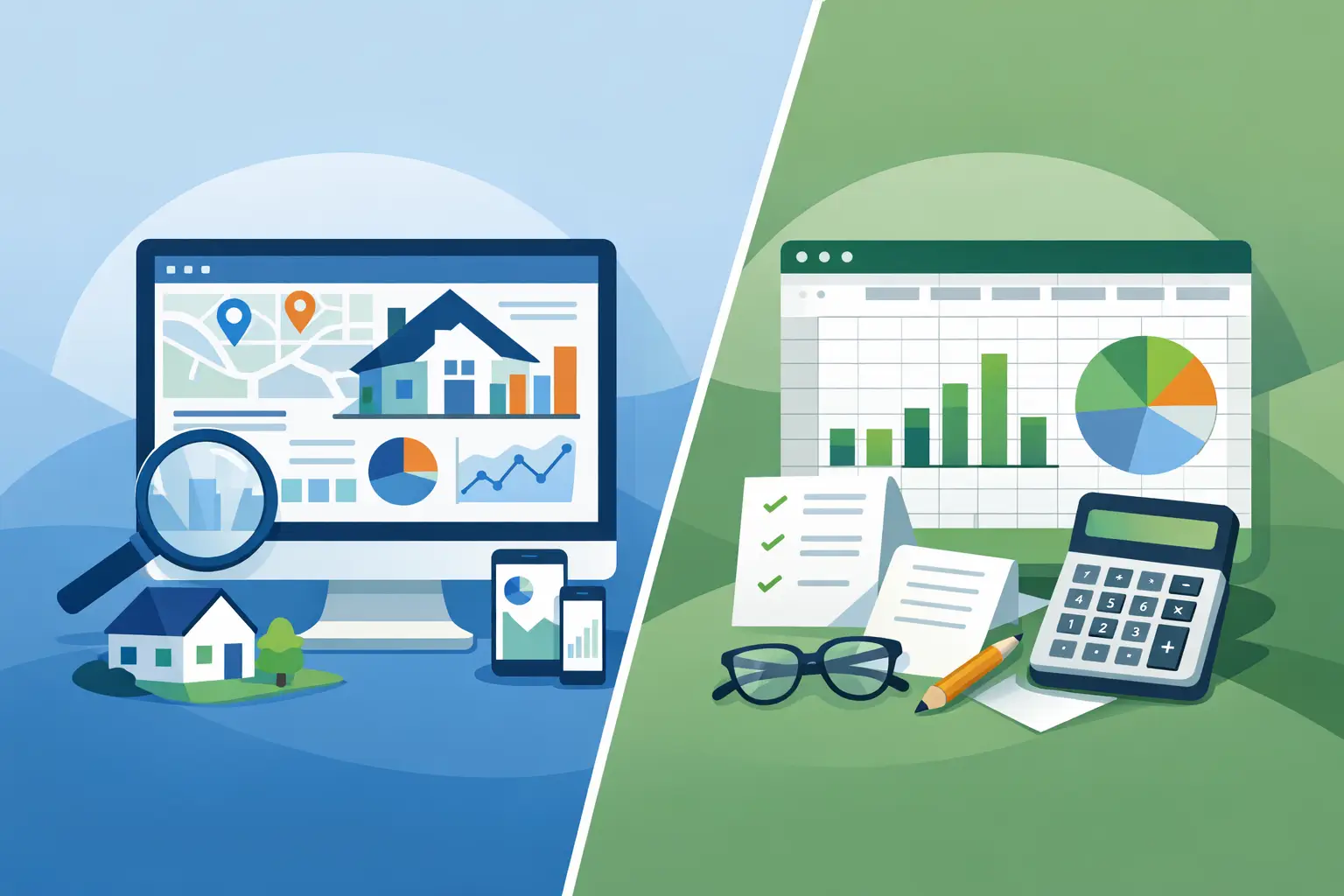
By the time a weekly owner report is built, the numbers are already stale. Occupancy shifted yesterday, ADR moved this morning, and maintenance costs changed the margin before anyone hit send. That is the real issue in property dashboard vs spreadsheets - not preference, but decision speed.
For single-asset operators with simple reporting needs, spreadsheets can still do useful work. But once a portfolio includes multiple villas, short-term rentals, or hospitality units, the reporting layer becomes an operational system whether you planned for it or not. At that point, the question is no longer which format feels familiar. It is which system gives management a current, accurate view of performance.
Property dashboard vs spreadsheets: what actually changes?
The difference is not just visual. A spreadsheet is a manual framework for storing and organizing data. A property dashboard is a live intelligence layer designed to consolidate inputs, surface patterns, and support decisions.
That distinction matters because professional property operations do not run on one metric. Revenue, occupancy, booking pace, channel mix, owner payouts, housekeeping status, maintenance issues, and guest experience signals all interact. In a spreadsheet workflow, teams often move these metrics across tabs, files, and versions. In a dashboard environment, the goal is to centralize those signals into one operating view.
This is where scale exposes the gap. A spreadsheet can represent complexity, but it does not reduce it. It usually pushes the burden onto the team member updating formulas, validating exports, and checking whether one file conflicts with another. A dashboard shifts that burden away from manual assembly and toward interpretation.
Where spreadsheets still make sense
Spreadsheets are not obsolete. They remain useful for ad hoc modeling, one-off budget scenarios, and early-stage operations that need flexibility more than infrastructure. If you manage a small number of properties and know the numbers personally, a spreadsheet may be enough for monthly analysis.
They are also effective when the work is exploratory. Revenue managers may test assumptions in a spreadsheet before rolling a new pricing approach into a broader reporting process. Finance teams may use spreadsheets for custom forecasting logic that changes frequently. In those cases, control and flexibility matter.
The problem starts when the spreadsheet becomes the system of record for ongoing operations. What worked as a flexible tool becomes a fragile dependency. One broken formula, one missed update, or one duplicated file can create reporting drift across the business.
For professional operators, that risk is not minor. It affects owner trust, team alignment, and the quality of decisions tied to revenue, staffing, and asset performance.
Why dashboards matter more as portfolios grow
As soon as a team manages across properties, functions, or markets, data fragmentation becomes expensive. One property may outperform on occupancy but underperform on net revenue after maintenance and service costs. Another may look healthy in top-line bookings while guest sentiment is slipping. These are not issues you want to discover at month-end.
A property dashboard is valuable because it compresses reporting lag. Instead of building a retrospective view from disconnected systems, operators get a current picture of what is happening now and where to act next.
That matters for revenue management, but it matters just as much for operations. If guest issues spike at one villa, if turnaround times slip on weekends, or if direct bookings lose share to higher-cost channels, management needs visibility before the pattern becomes a margin problem.
This is why dashboards tend to create leverage for multi-property teams. They do not just save reporting time. They make cross-property comparison practical. A founder, portfolio owner, or operations lead can see which assets are outperforming, which need intervention, and where process friction is hiding.
The hidden cost of spreadsheet-based reporting
Most teams do not measure the real cost of spreadsheets because the expense is distributed across labor, delays, and avoidable mistakes. It shows up in analysts cleaning exports, managers questioning report accuracy, and leadership making decisions from partial information.
There is also a version-control problem that grows quietly. Once reports are shared across finance, operations, revenue, and ownership stakeholders, spreadsheets multiply. Different files start circulating. Definitions drift. One team calculates net revenue one way, another uses a slightly different formula, and soon the debate is about whose numbers are correct rather than what action to take.
That kind of reporting friction is more than administrative overhead. It slows execution. In hospitality and short-term rental operations, timing matters. Pricing adjustments, staffing changes, maintenance scheduling, and owner communication all improve when the underlying visibility is reliable.
A dashboard does not remove the need for judgment. It removes unnecessary uncertainty around the data itself.
Property dashboard vs spreadsheets for decision-making
The strongest case for a dashboard is not convenience. It is management quality.
Spreadsheets are good at answering known questions if someone has time to build the logic. Dashboards are better at surfacing conditions that deserve attention before someone asks. That difference is critical for operators overseeing high-value assets or a growing portfolio.
For example, if booking pace softens for a specific property type, a spreadsheet may show it after the weekly export is complete. A dashboard can expose the drop sooner, alongside related indicators such as channel mix, average lead time, or pricing position. That gives revenue teams a chance to respond while there is still room to influence the outcome.
The same principle applies to operations. If one cluster of properties has rising maintenance incidents and lower review scores, leadership needs a connected view, not two separate reports reviewed days apart. Better decisions come from context, not isolated metrics.
This is where intelligence platforms stand apart from simple reporting tools. They are built to convert raw activity into operational awareness.
It depends on what your team actually needs
Not every business needs a sophisticated dashboard on day one. If you operate two or three properties with stable demand and limited complexity, spreadsheets may remain a rational choice for a while. The key is being honest about the threshold where manual reporting starts restricting the business.
That threshold usually appears earlier than expected. It can come from portfolio growth, more owners, additional markets, tighter margin pressure, or a need for faster coordination between operations and revenue. It can also come from executive expectations. Once leadership wants a reliable portfolio-wide view without waiting for manual updates, spreadsheets begin to show their limits.
A dashboard also needs the right implementation mindset. If the data sources underneath it are inconsistent, the interface alone will not solve the problem. The value comes from clean integration, metric standardization, and clarity about what the team is trying to manage.
So the right question is not whether dashboards are better in theory. It is whether your current reporting method supports the speed, scale, and accountability your operation now requires.
What professional operators should look for instead
If you are moving beyond spreadsheets, the goal is not a prettier report. It is a better operating system for property intelligence.
That means centralized visibility across assets, live or near-live performance tracking, consistent definitions across teams, and enough analytical depth to connect revenue outcomes with operational drivers. For villa operators and short-term rental managers, it should also support portfolio comparison without forcing teams into manual reconciliation.
The strongest platforms do more than aggregate numbers. They help management identify variance, detect patterns, and prioritize action. That is especially relevant for businesses balancing guest experience, owner expectations, and commercial performance across multiple properties.
This is the shift from record-keeping to intelligence. And for modern operators, that shift is strategic, not cosmetic.
VillaPilot AI sits in that category of platform thinking - not as a replacement for analysis, but as a system designed to make analysis operational.
At a certain stage, spreadsheets stop being a cost-effective solution and start becoming a drag on visibility. When that happens, the smarter move is not to build a more complicated workbook. It is to give your team a clearer view of the business they are already trying to run.