A guest reports that the pool heater is down two hours before arrival. The maintenance request sits in one system, the guest message in another, and the property’s recent utility spike is buried in a spreadsheet. The issue is not a lack of effort. It is a lack of shared operational context.
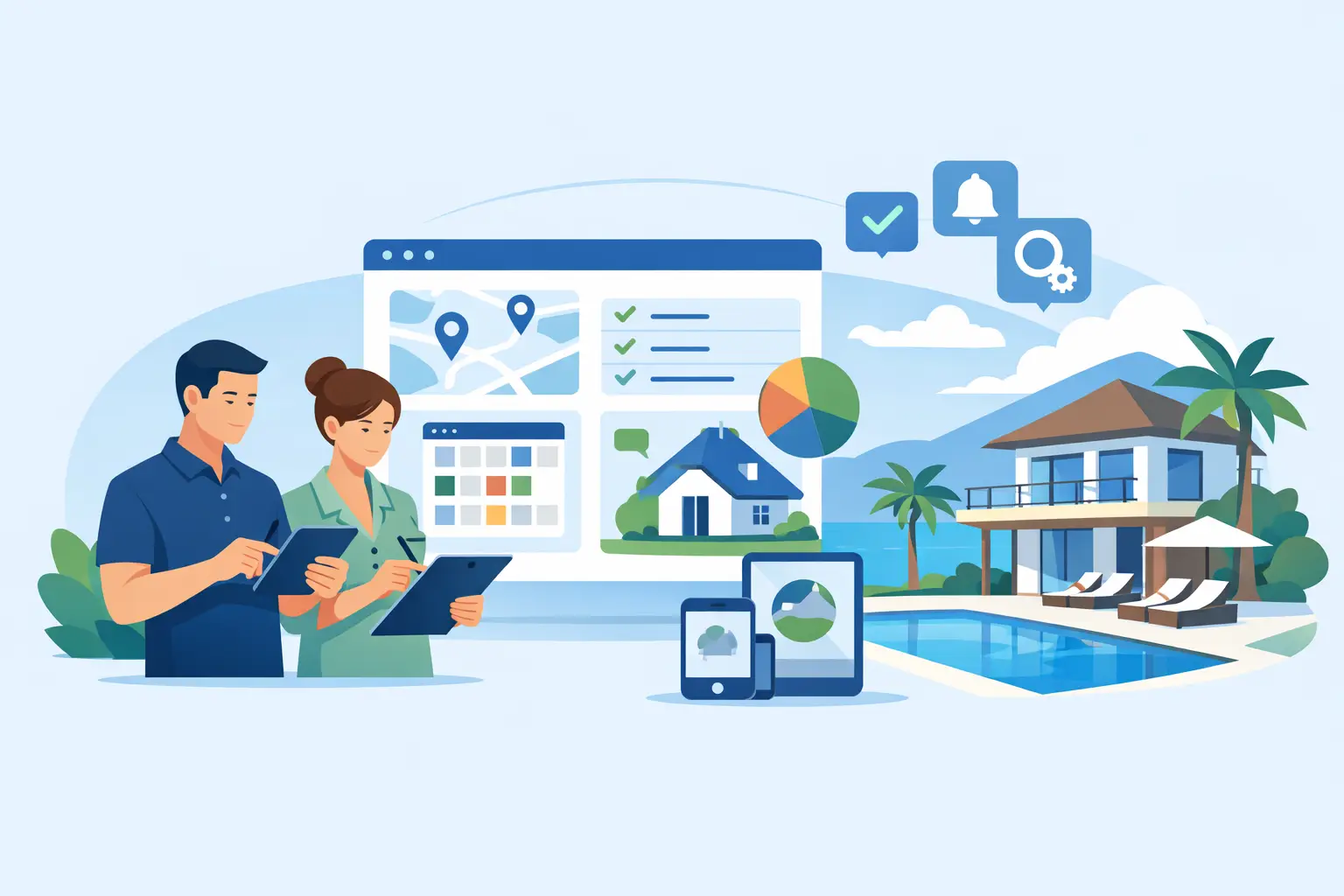
Operational visibility software gives villa operators a current, decision-ready view of what is happening across a portfolio: which properties need attention, where costs are moving, which guest issues are recurring, and where teams are falling behind. For managers responsible for high-value homes and dispersed field teams, that visibility changes how quickly problems are found, assigned, and resolved.
Why operational blind spots become expensive
Vacation rental operations are naturally fragmented. Reservations may live in a property management system. Housekeeping may coordinate through chat. Maintenance vendors may use email or text. Revenue data may sit with a channel manager, while owner reporting happens in separate documents.
Each tool may perform its own job well. The operational problem begins when no one can see the combined picture without manually chasing updates. A property manager may know occupancy is strong but miss rising maintenance costs. An operations lead may see a delayed turnover but not recognize that the same cleaning issue has affected three recent arrivals. A portfolio owner may receive a monthly report after the opportunity to intervene has passed.
These are not merely reporting gaps. They affect guest experience, margin, owner confidence, and the team’s ability to scale. As a portfolio grows, informal coordination becomes less reliable because important signals are distributed across too many people and systems.
What operational visibility software should show
The best operational visibility software is not another task list with a dashboard attached. It acts as an intelligence layer that connects property performance with operational execution.
At the portfolio level, operators should be able to identify exceptions quickly. That might include upcoming arrivals with unresolved work orders, properties with unusually high owner expenses, open guest cases, low inspection scores, or vendor tasks that have exceeded their expected completion time. The objective is not to review every property every day. It is to focus attention where attention is needed.
At the property level, the platform should provide a usable operating record. A manager should be able to understand recent guest feedback, active tasks, maintenance history, occupancy context, key costs, and operational risks without opening multiple tabs or asking several team members for a status update.
For field teams, visibility must lead to clear action. A cleaner, inspector, maintenance coordinator, or villa manager needs to know what is assigned, what is due, what has changed, and what information is required to complete the work correctly. Centralized data is only valuable when it reduces ambiguity for the people doing the work.
Visibility is different from more data
Many operators already have more data than they can use. What they lack is prioritization.
A useful platform distinguishes between normal activity and meaningful exceptions. It can surface a pattern, such as repeated air-conditioning complaints at a specific property, rather than leaving managers to connect individual guest messages over several weeks. It can flag a cost trend before it becomes an owner escalation. It can show whether a late turnover is isolated or part of a vendor performance issue.
This distinction matters because operational teams do not need another report to review. They need a system that helps them decide what to do next.
The operating decisions it improves
Operational visibility has the strongest impact when it supports recurring decisions, not just executive reporting. In a villa portfolio, those decisions often happen under time pressure and involve trade-offs between service quality, cost control, and revenue protection.
Consider a same-day turnover. Without a unified view, the operations manager may learn about a maintenance issue only after housekeeping arrives. With current property context, the team can see the incoming reservation, task dependencies, previous inspection notes, inventory status, and the appropriate vendor contact in one place. The decision becomes proactive: dispatch the right resource, adjust the schedule, notify the guest if necessary, and document the outcome.
The same applies to revenue and asset performance. If a property is producing strong booking revenue but requires disproportionate maintenance spend and repeated guest recovery costs, top-line revenue alone can be misleading. Visibility software allows operators to assess performance in context, property by property and across the portfolio.
For owners and investment teams, this creates a more credible basis for discussion. Instead of receiving a static statement, they can understand the operational drivers behind financial results: guest satisfaction trends, maintenance exposure, occupancy patterns, response times, and unresolved risks.
Where implementation usually fails
Buying software does not create visibility by itself. The most common failure is treating the platform as a reporting destination rather than part of the operating model.
If task owners do not update work status, the data becomes stale. If property naming is inconsistent across systems, records cannot be connected reliably. If every alert is treated as urgent, teams begin to ignore alerts altogether. The technology must reflect how the operation actually runs, including who owns a task, when an escalation is required, and what a completed outcome looks like.
There is also a trade-off between standardization and flexibility. A boutique operator may want different service standards for a city apartment, a beach villa, and a large estate. That is reasonable. But the underlying definitions still need consistency. A completed inspection, a maintenance priority level, and a guest incident category should mean the same thing across the portfolio. Otherwise, comparison becomes unreliable.
Start with a limited set of high-value workflows. Pre-arrival readiness, turnover coordination, open maintenance, guest issues, and expense anomalies are often the right place to begin. Once the team trusts the data and follows a consistent process, additional reporting and automation become more valuable.
How to evaluate a platform
The right platform depends on portfolio complexity, existing systems, and the decisions your team needs to make every day. A single operator with a few properties may prioritize task clarity and guest issue tracking. A multi-market management company may need cross-portfolio benchmarking, owner-level reporting, and stronger controls around vendor performance.
During evaluation, ask whether the platform can answer these questions without manual reconciliation:
- Which properties require intervention before the next arrival?
- Where are operating costs or maintenance requests trending outside the norm?
- Which tasks, vendors, or teams are creating recurring delays?
- Can a manager understand a property’s current condition and performance from one operating view?
Also assess the quality of integrations and data governance. A dashboard built on incomplete or delayed data can create false confidence. The platform should make data sources, refresh timing, ownership, and exceptions clear enough for managers to trust the information in active operations.
VillaPilot AI is built around this intelligence-first approach: connecting fragmented property signals so operators can move from reactive coordination to informed control.
Build a habit of acting on the signal
Visibility delivers value when it becomes part of the operating rhythm. A daily exception review can protect arrivals and guest experience. A weekly portfolio review can reveal emerging cost, maintenance, and service patterns. A monthly owner conversation can then focus on decisions rather than reconstructing what happened.
The goal is not to watch every metric. It is to create a reliable way for the right person to see the right issue early enough to change the outcome. Start with the operational questions your team repeatedly struggles to answer, then build the visibility needed to answer them with confidence.