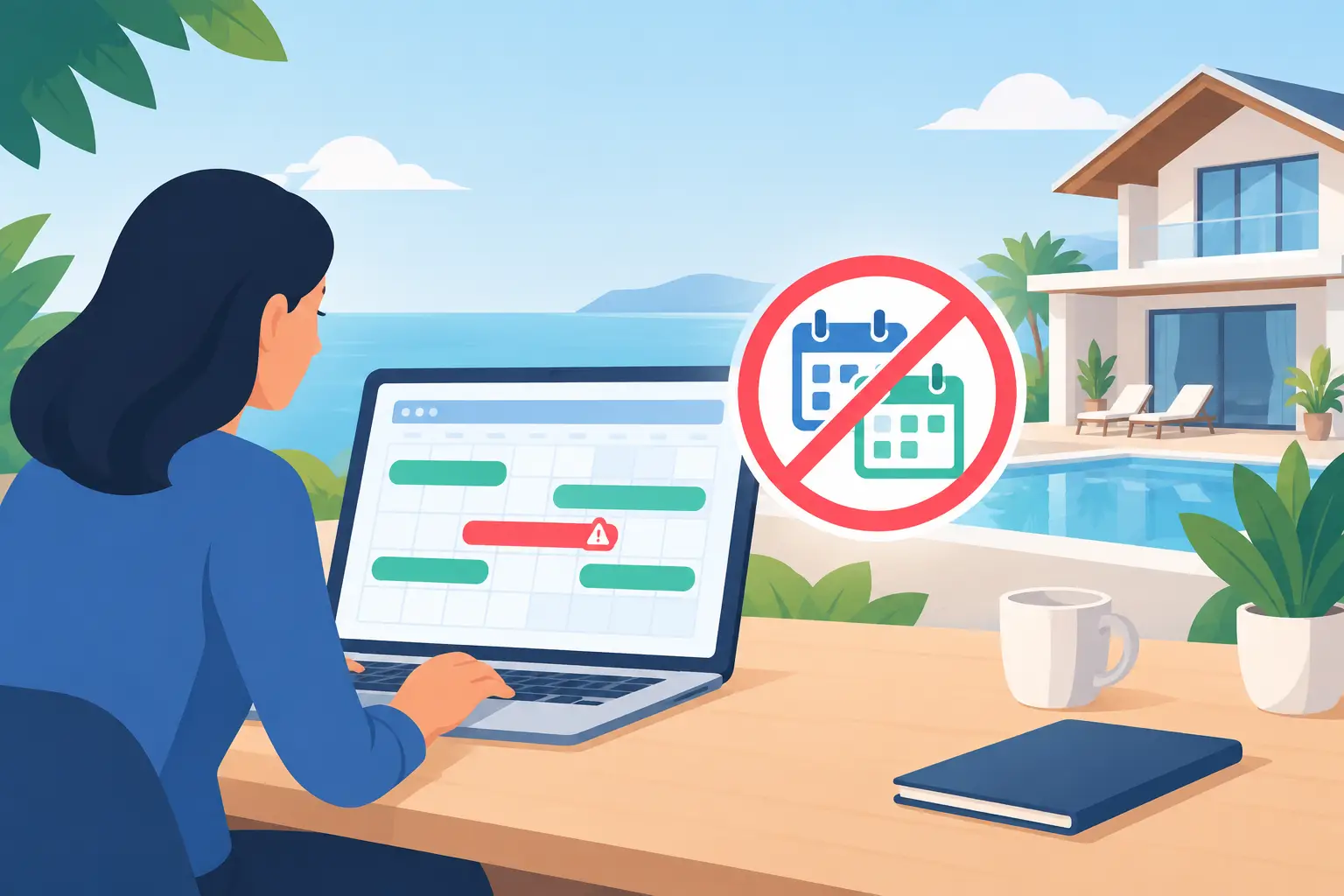
A double booking is rarely just a calendar error. For a villa operator, it can trigger a guest relocation, a refund, damaged owner confidence, and an operations team forced into expensive recovery mode. Learning how to prevent double bookings means treating availability as a controlled operational asset, not a collection of dates spread across disconnected systems.
The risk rises with every new channel, team member, direct booking source, and property in the portfolio. A booking may arrive from an OTA while an agent is holding dates manually, a cleaner may block time for maintenance in a separate tool, or a delayed integration may leave one calendar temporarily out of date. The answer is not more manual checking. It is a stronger availability architecture with clear accountability.
How to Prevent Double Bookings With One Source of Truth
Every property needs one authoritative availability record. This is the calendar that determines whether a date can be sold, blocked, released, or priced. All channels should receive availability from that record, rather than allowing multiple platforms to independently control inventory.
For most professional operators, a property management system or channel manager should serve as this source of truth. Direct booking engines, OTAs, partner agencies, and internal reservation workflows should connect to it through reliable two-way integrations. When a booking is confirmed in any connected channel, the master calendar must close those dates everywhere else immediately.
Not all connections provide the same level of protection. API-based integrations typically update near real time and can transmit reservations, modifications, cancellations, rates, and restrictions. Calendar feeds using iCal can be useful for low-volume channels, but they may refresh on a schedule rather than instantly. For high-demand villas, last-minute inventory, or properties listed across several channels, a delayed feed introduces material exposure.
The practical decision is simple: use the strongest available connection for your highest-volume and highest-risk channels. If a channel only supports delayed synchronization, limit its inventory, add a booking buffer, or avoid using it for dates that turn quickly.
Map Every Way a Date Can Be Taken
Double bookings often persist because operators focus on public listing sites while overlooking the other ways reservations enter the business. A complete inventory map should include direct website reservations, OTA bookings, travel advisor requests, corporate stays, owner stays, maintenance holds, internal complimentary bookings, and extensions for in-house guests.
Each path must either write directly to the master calendar or follow a documented process that does so before a reservation is promised. A phone inquiry is not an exception. Neither is a WhatsApp request from a repeat guest or an owner asking for a weekend hold. These are precisely the moments when informal habits create conflicting commitments.
A reservation should move through defined states: inquiry, temporary hold, confirmed, modified, canceled, or blocked. The rules behind those states matter. For example, a temporary hold might expire automatically after two hours if payment is not received. A confirmed booking should close inventory instantly. A maintenance block should require a reason, owner, and review date so it does not quietly suppress revenue for weeks.
This structure also protects against a common problem in premium rentals: teams treating a verbal agreement as a reservation. Until a booking is recorded in the same system that controls inventory, the date remains vulnerable.
Set Channel Rules Instead of Treating Every Listing Alike
A portfolio does not need identical distribution rules across every property. A flagship villa with frequent short-lead bookings requires tighter controls than a seasonal home sold primarily through one agency. The right setup depends on booking velocity, average stay length, cancellation behavior, and the reliability of each channel connection.
Start by assigning clear channel priorities. Your direct channel may deserve the broadest availability and most current rates. Selected OTAs may receive full inventory because their integrations are dependable. Lower-performing or manually managed channels may receive restricted date ranges, longer lead times, or a limited allocation.
Minimum-stay rules and preparation buffers deserve the same discipline. A two-night booking can create an unsellable gap between longer stays, while an insufficient turnover window can lead a team to block dates at the last minute. Revenue management and operations should set these restrictions together. Availability is not only a sales decision - it must reflect the real capacity to clean, inspect, maintain, and welcome guests.
Avoid blanket buffers that remove too much inventory. A one-day buffer after every stay may reduce conflict risk, but it can also suppress revenue where same-day turns are operationally viable. Use property-level rules based on staffing, travel times, check-in complexity, and historical turnaround performance.
Make Ownership Visible Across the Team
Technology can synchronize calendars, but it cannot resolve unclear responsibility. Someone must own availability integrity across the portfolio. In a smaller operation, that may be the reservations manager. In a larger group, it may sit with operations leadership supported by revenue management and distribution teams.
The owner of availability should have authority to define channel access, approve manual blocks, investigate sync failures, and remove duplicate listings. Team members should know exactly who can make changes and which changes require approval. Broad calendar permissions may feel flexible, but they create a weak audit trail and make errors difficult to diagnose.
Use role-based access wherever possible. A housekeeping coordinator may need to request or view a maintenance block but should not be able to reopen booked dates. A reservations agent may create a short hold but not override a confirmed reservation. A portfolio manager may need reporting visibility without the ability to alter live inventory.
A concise daily exception review is more valuable than a lengthy weekly meeting. Review new reservations, modified dates, canceled stays, manual blocks, failed integrations, and properties showing inconsistent availability. The goal is to find anomalies while the operational cost is still low.
Design for Sync Failures and Human Error
No integration is infallible. APIs can fail, credentials can expire, channels can change mapping requirements, and staff can make mistakes during a busy check-in period. Prevention depends on detecting these events quickly and having a predefined response.
Configure alerts for failed calendar updates, listings that disconnect from the channel manager, reservations received outside the normal workflow, and overlapping bookings. An alert should identify the property, dates, channels involved, and assigned owner. A vague notification that arrives hours later is not an operational control.
When an overlap is detected, the team needs a triage order. First, verify whether both reservations are genuinely confirmed and identify which system recorded each booking first. Next, stop further sales on the affected dates. Then determine the least disruptive recovery option, such as moving a flexible reservation within the portfolio or securing comparable alternative accommodation. Document the root cause after the guest issue is resolved.
This last step is where mature operators improve. Categorize incidents by cause: delayed synchronization, duplicate listing, unauthorized manual block, unclear owner policy, modification error, or staff process failure. Repeated categories reveal whether the problem is a technical configuration issue or an operating model issue.
Use Property Intelligence to Identify Risk Before It Becomes a Conflict
Calendar synchronization prevents many direct conflicts, but portfolio intelligence helps operators see the conditions that make them more likely. Properties with high booking velocity, multiple distribution partners, frequent date changes, or recurring manual overrides deserve closer monitoring than stable, single-channel homes.
An intelligence layer can surface unusual patterns: a villa that repeatedly receives last-minute blocks, a channel with delayed updates, properties with fragmented availability, or staff workflows that generate an abnormal number of booking amendments. These signals allow managers to act before a guest is affected.
For operators overseeing high-value homes across markets, centralized visibility is especially useful. VillaPilot AI is built around this level of operational intelligence, helping teams turn fragmented property activity into clearer decisions. The objective is not simply to automate a calendar. It is to understand where availability risk is forming and apply controls at the portfolio level.
The best prevention model combines dependable integrations with disciplined human workflows. Keep one calendar authoritative, control every path into inventory, set channel-specific rules, and investigate exceptions as operational data. When availability is managed with that level of precision, your team spends less time rescuing reservations and more time protecting revenue, guest trust, and the value of every property in the portfolio.