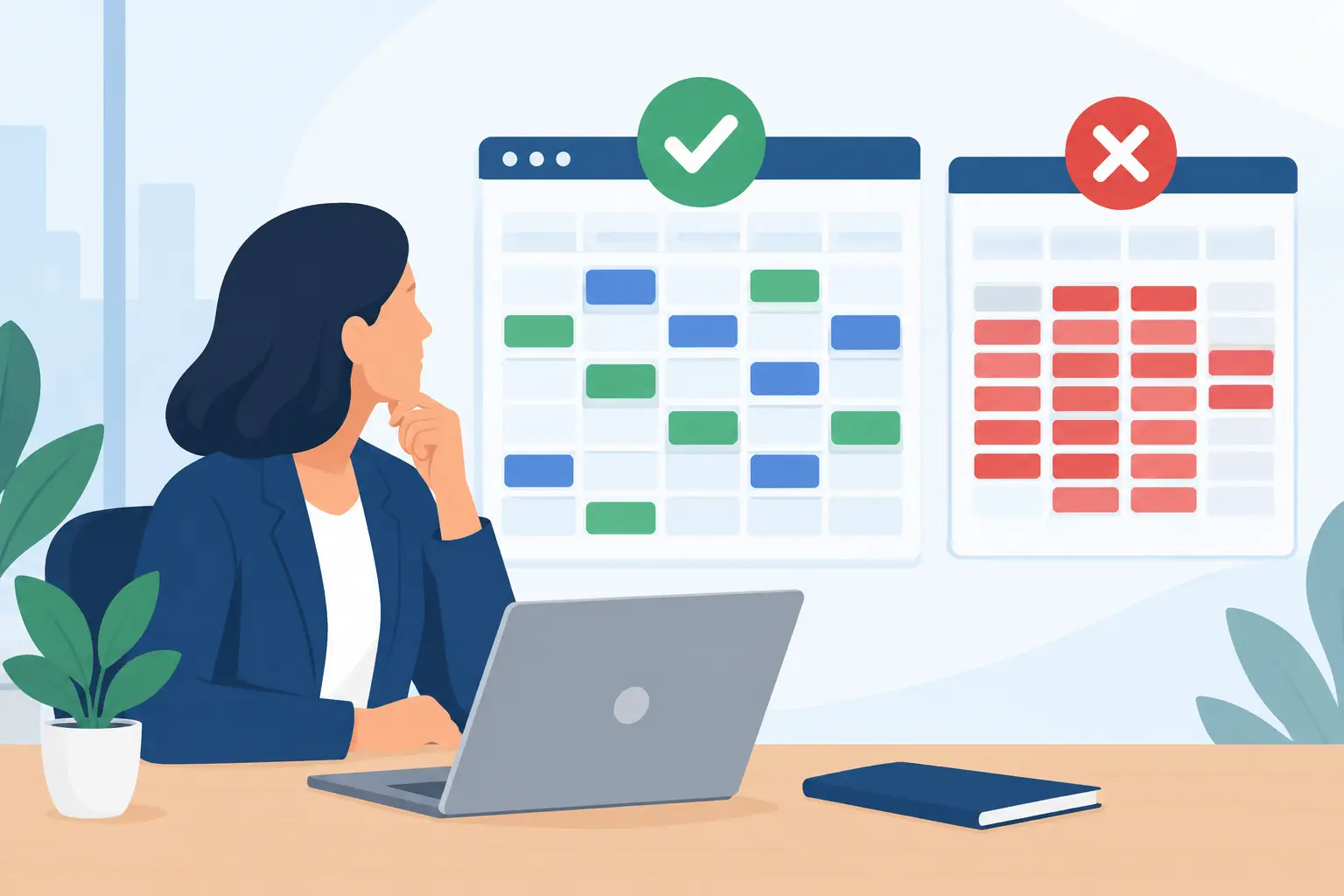
A double booking is rarely caused by one dramatic failure. More often, it begins with a two-minute delay between channels, a blocked date that was not pushed everywhere, or a team member making an offline promise without a shared record. For operators managing villas, short-term rentals, or boutique portfolios, the real question is: how can managers prevent overbooking without slowing down revenue activity?
The answer is not simply to close more dates or accept fewer reservations. It is to build a booking operation where inventory status, distribution rules, and human decisions are visible in one controlled system. Overbooking is an information problem before it becomes a guest service problem.
Why Overbooking Persists in Professional Portfolios
Overbooking happens when two or more sources believe the same nights are available. Those sources may be online travel agencies, direct booking engines, channel managers, sales teams, property managers, or owners who retain access to calendars. The more properties and channels involved, the more likely a small timing or process gap becomes an expensive conflict.
The commercial cost is larger than relocation expenses. A displaced guest can create negative reviews, refund demands, compensation claims, and lost trust with travel advisors or repeat bookers. In high-value villa stays, the operational disruption can also consume senior team time at precisely the moment the guest expects certainty.
Some overlap is intentional. Hotels may oversell based on forecasted cancellations and no-shows. That model is far less forgiving for vacation rentals, where each unit is distinct, alternatives are limited, and a guest may have selected a property for its location, layout, or amenities. For most villa operators, prevention is the more profitable strategy.
How Can Managers Prevent Overbooking? Start With One Inventory Truth
Every property needs one authoritative availability record. This does not mean every team member must work in the same screen all day. It means all systems and people must recognize the same source as final when availability is disputed.
A centralized property intelligence layer should show confirmed reservations, owner stays, maintenance blocks, provisional holds, arrivals, departures, and channel status at property level. It should also distinguish between a date that is unavailable and a date that is temporarily held. Treating both as generic calendar blocks creates uncertainty and makes teams more likely to override each other.
For multi-property operators, visibility must extend beyond a single calendar. Managers need to see whether a booking has synchronized across all active channels, which integration last updated, and whether exceptions require action. VillaPilot AI is built around this type of operational visibility: turning fragmented property signals into a clearer decision environment.
Centralization only works when ownership is explicit. Assign a role or team to govern inventory rules, approve manual overrides, and resolve sync exceptions. If everyone can alter availability, no one is accountable for its accuracy.
Define the booking states that matter
A practical inventory model uses clear statuses rather than informal notes. Confirmed bookings should immediately reduce sellable inventory. Temporary holds should have an expiration time. Owner use and maintenance should be treated as firm blocks unless an authorized manager releases them. Cancellations should reopen dates only after the cancellation is confirmed in the source system and any payment or policy requirement is satisfied.
This discipline matters most during high-demand periods. A vague “pending” label may be harmless on a low-season Tuesday. During a holiday week or major event, it can lead to a same-day conflict worth thousands of dollars.
Control Distribution Before It Controls You
More channels can improve occupancy and rate reach, but each channel adds synchronization risk. A distribution strategy should be based on the value of incremental demand, not the assumption that every property must be sold everywhere.
Start by mapping each property, its connected channels, its booking lead time, and its cancellation profile. A flagship villa with long booking windows may require tighter controls than a city apartment with frequent short stays. Properties with complex turnaround needs, owner restrictions, or manually managed ancillary services may also need more conservative distribution settings.
Use channel rules to protect availability during the moments when data is most likely to lag. These may include minimum lead times, cut-off windows for same-day arrivals, length-of-stay restrictions, and stop-sell rules for dates under operational review. The goal is not to create friction for the sake of it. The goal is to prevent a reservation from being accepted before the team can reliably fulfill it.
Rate parity deserves the same attention. When a manager manually adjusts pricing or availability in one channel, the change should be traceable and verified across every relevant channel. A calendar can look accurate while rate or minimum-stay mismatches drive bookings that the operation cannot honor.
Replace Manual Checks With Exception Alerts
Daily calendar review is useful, but it is not a control system. It depends on people noticing the right issue at the right time. Scaled operations need exception-based monitoring that tells the team where to look.
Set alerts for conditions such as these:
- A reservation appears in one channel but not in the central record within a defined time window.
- A property has conflicting confirmed bookings or overlapping holds.
- A channel connection fails, stops updating, or returns an error.
- A manual availability change is made for high-value or near-term dates.
- A maintenance or owner block overlaps an accepted reservation.
Alerts should be prioritized by commercial and guest impact. A sync delay for a low-demand stay months away is not the same as a conflict involving an arrival tomorrow. Give operations teams a queue that identifies property, dates, source channel, booking value, and the recommended next action.
This is where intelligence matters more than automation alone. Automation can move data between systems. An intelligence layer helps managers identify which anomaly is most likely to create a real loss, so attention is directed to the exceptions that matter.
Build a Process for Direct, Offline, and Owner Bookings
Many preventable overbookings occur outside the main booking flow. A sales agent promises dates by email. An owner requests a stay by text. A corporate client asks for a soft hold while a contract is reviewed. None of these actions are inherently risky, but they become risky when they bypass inventory governance.
Create a simple rule: no date is promised until it is held or confirmed in the authoritative system. If a sales team needs flexibility, use time-bound option holds with a defined expiry and clear ownership. If owner stays are permitted, require them to be entered through the same workflow as guest reservations.
The policy should include an escalation path. When a manual request conflicts with an existing reservation, staff should know who can approve an alternative, whether relocation is acceptable, and how the decision is recorded. Leaving this to informal judgment produces inconsistent guest outcomes and weakens reporting.
Design for Real-World Sync Failure
Even strong integrations can fail. APIs time out, credentials expire, providers change settings, and connectivity gaps occur. The right approach is not to assume perfect synchronization. It is to define what happens when synchronization is uncertain.
For critical dates, establish a verification cadence. Arrival periods, peak season, and properties with high daily rates may warrant a closer check than low-risk inventory. If a channel connection fails, automatically pause availability where possible until the issue is resolved. This may sacrifice a small amount of potential demand, but it is often cheaper than accepting a booking you cannot accommodate.
Teams should also rehearse the recovery process. Confirm who contacts the guest, who secures alternatives, who approves compensation, and who updates each channel. A documented response does not prevent the conflict, but it limits the damage when prevention fails.
Measure the Signals Behind Overbooking Risk
Overbooking prevention improves when it is treated as an operational metric, not a one-off incident. Track sync failures, manual overrides, hold expirations, conflicting-calendar alerts, resolution time, and the source of every booking conflict. Review these signals by property, channel, and team workflow.
Patterns often reveal the real issue. Repeated conflicts on one channel may point to an integration configuration problem. Frequent owner-date overlap may indicate weak governance. A high number of manual changes may mean pricing, availability, or distribution rules are too difficult to manage centrally.
The goal is not zero manual work. High-value hospitality operations will always need judgment. The goal is to make manual decisions visible, controlled, and measurable before they create a guest-facing failure.
A reliable calendar is not just an operational convenience. It is the foundation for confident distribution, accurate revenue decisions, and service promises your team can keep. Build controls around the moments where information fragments, and overbooking becomes an exception to investigate rather than a recurring cost of growth.