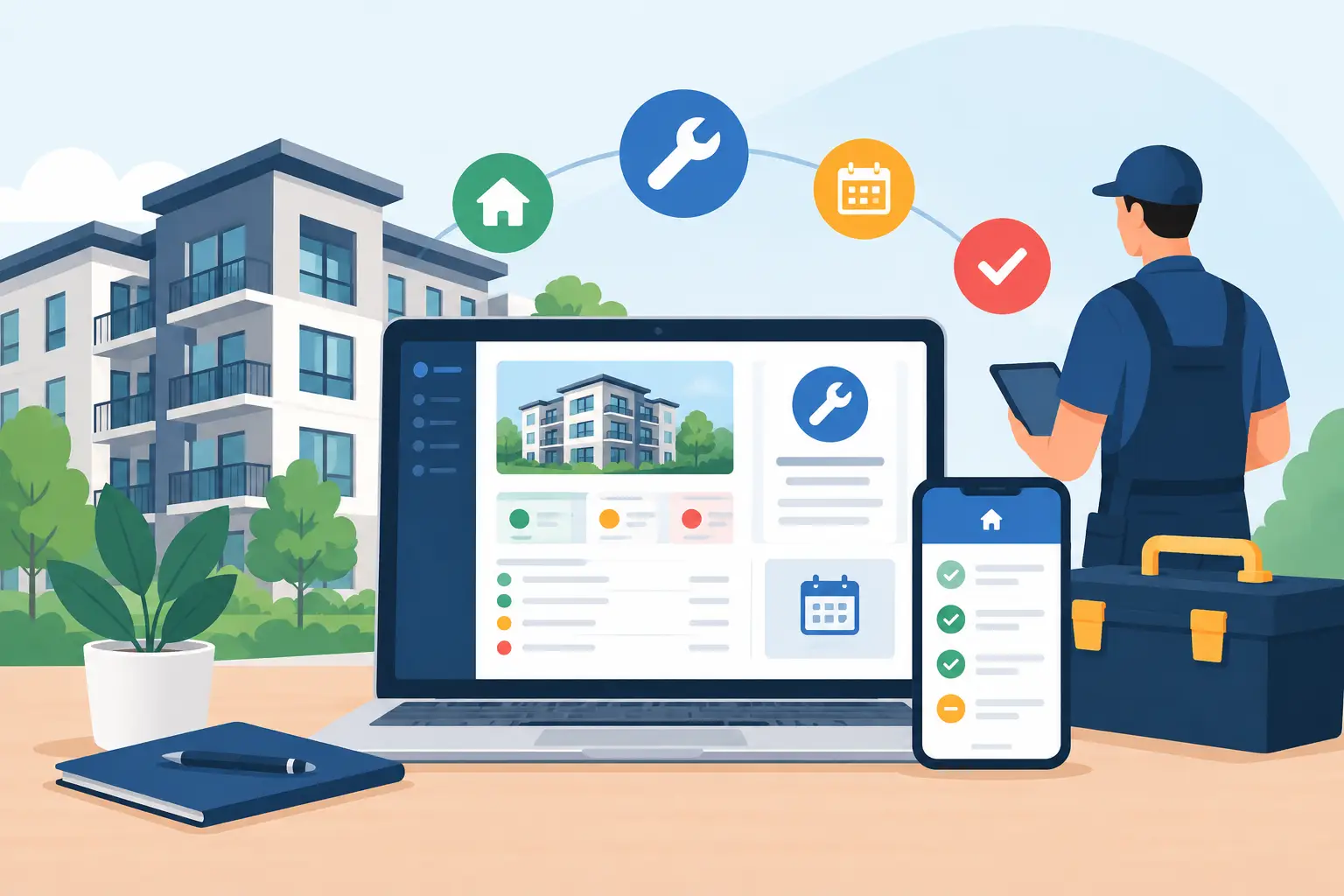
A failed AC unit is never just a failed AC unit. For a villa operator, it can become a same-day guest complaint, an emergency vendor call, a refund discussion, and a missed opportunity to identify a recurring equipment issue. The best rental maintenance tracking systems turn that chain of events into a controlled workflow with ownership, history, cost visibility, and a documented resolution.
For professional vacation rental portfolios, maintenance tracking should not sit in scattered messages, spreadsheets, and the memory of one experienced operations manager. It needs to function as an operational intelligence layer: one that shows what needs attention now, what has failed before, which properties create disproportionate cost, and where preventative work will protect guest experience and asset value.
What separates a tracker from a maintenance system
A basic tracker records a task. A capable maintenance system connects the task to a property, an asset, a responsible person, a deadline, supporting evidence, and an outcome. That distinction matters when a portfolio grows beyond a handful of units.
Consider a recurring pool pump issue. A task list may show that a technician was called three times. A maintenance system should reveal the pump model, prior service notes, photos, invoices, repair cost, time out of service, vendor response time, and whether replacement is now economically smarter than another repair. The value is not the ticket itself. It is the decision quality created by the record around it.
For short-term rentals, the system also needs to respect the operating calendar. A work order that can wait in a long-term rental may need resolution before a 3:00 p.m. check-in. Maintenance priorities must account for guest arrival, owner stays, high-revenue booking dates, access coordination, and cleaning turnover windows.
The best rental maintenance tracking systems by use case
There is no single best platform for every operator. The right choice depends on whether maintenance is your central operational problem or one part of a broader property management stack.
Breezeway for field execution and guest-ready standards
Breezeway is often a strong fit for vacation rental operators that need to coordinate property care at speed. Its focus on operational tasks, inspections, maintenance, and service coordination makes it especially relevant where multiple field teams and vendors move across a distributed portfolio.
This category of system works well when the main failure point is execution: tasks are missed, turnover findings are not escalated, or managers cannot confirm that a repair was completed to standard. The trade-off is that operators may still require a separate property management system for reservations, accounting, and broader guest communication.
Properly for visual inspections and turnover quality
Properly is best known for helping teams standardize cleaning and inspection work through visual checklists. For operators whose maintenance issues are frequently discovered during turnovers, that can be highly valuable. A cleaner can flag damaged linens, a leaking appliance, or a broken lock with photo evidence rather than relying on a vague note.
It is particularly useful for managers building consistency across independent cleaners or regional teams. Its maintenance depth may be less suitable for organizations seeking detailed asset lifecycle planning, complex vendor controls, or portfolio-wide capital expenditure analysis.
Guesty and Hostaway for connected property operations
Guesty and Hostaway are broader vacation rental management platforms with operational workflow capabilities. They are practical choices for teams that want maintenance requests close to reservations, guest messaging, calendars, and property records rather than in a standalone tool.
The benefit is context. A manager can see a repair alongside upcoming bookings and quickly assess operational risk. The limitation is that maintenance may not be as specialized as it is in a field-service platform. Before selecting either option, verify how work orders, vendor assignment, attachments, status automation, and maintenance reporting operate in the plan you are considering.
Buildium and AppFolio for mixed or long-term portfolios
For companies operating a mix of vacation rentals, residential units, and longer-term leases, Buildium and AppFolio can provide more established maintenance workflows tied to resident requests, vendor management, and accounting processes. They are generally better aligned with conventional residential property management than high-velocity vacation-rental turnovers.
They make sense when financial control, resident service requests, and scale across property types outweigh the need for vacation-rental-specific operating detail. A villa management team with frequent same-day turns may find them less tailored to its field workflow.
MaintainX or UpKeep for asset-centric operations
MaintainX and UpKeep represent a different category: computerized maintenance management systems. They are built around assets, preventive maintenance schedules, technician execution, and maintenance history. For a luxury villa portfolio with pools, generators, HVAC systems, irrigation, smart-home hardware, and other high-value infrastructure, this depth can be compelling.
These platforms usually require more process discipline to configure. They may not understand booking calendars or guest-impact priorities without integration or a supporting operations layer. They are most effective when an operator already has mature maintenance practices and wants stronger control over equipment reliability and lifecycle cost.
How to evaluate rental maintenance tracking systems
The best decision starts with the workflow you need to control, not the longest feature list. Ask where maintenance currently breaks down. Is it issue reporting, triage, vendor coordination, proof of completion, preventative scheduling, or cost analysis? A platform should improve the weak point without creating extra administrative work for the people in the field.
Work-order structure and accountability
Every request should capture the property, exact location, issue category, priority, assigned owner, due date, and status. Photos and comments are essential, particularly for remote owners and distributed teams. Look for a clear audit trail that shows who changed a status and when.
Avoid systems where “completed” is a final destination with no verification. A better workflow distinguishes reported, assigned, in progress, awaiting parts, ready for review, and closed. That makes stalled work visible before it affects a guest.
Preventative maintenance and asset history
Reactive work is expensive because it arrives at the least convenient moment. The system should support recurring schedules for HVAC servicing, pool equipment checks, safety inspections, pest control, generator testing, and seasonal readiness.
It should also retain service history at the asset level. If a water heater has generated three emergency calls in 18 months, your team should not need to search old chat threads to find that pattern. This is where maintenance tracking becomes a source of capital planning intelligence.
Calendar awareness and prioritization
A maintenance tool for rentals must recognize operational urgency. A minor repair in an unoccupied property is different from the same repair four hours before a premium booking arrives. Assess whether the system can surface upcoming stays, block availability where necessary, and route urgent work to the right person.
Priority rules should be defined internally before automation is introduced. Safety, security, water damage, climate control, and essential guest amenities usually require different response targets. Automating an unclear process only makes inconsistency happen faster.
Vendor performance and cost visibility
Maintenance costs rarely become strategic data when invoices are stored separately from work orders. The chosen system should make it possible to compare vendor response times, completion quality, repeat-call rates, and spend by property or asset type.
For portfolio owners, this reporting identifies whether a property is under-maintained, whether one vendor is creating repeat work, and whether operating costs are rising before margins are visibly affected. VillaPilot AI can add a broader intelligence layer by connecting operational signals with property performance, helping teams see where maintenance activity may be affecting revenue and guest outcomes.
Design the operating model before implementation
Technology cannot resolve uncertainty about who owns a problem. Before rolling out a system, define the path from issue discovery to closure. A housekeeper might report an issue, an operations coordinator may triage it, a vendor may complete the work, and a property manager may verify the result. Each handoff needs a clear standard.
Start with a limited property group and a small set of high-frequency issue categories. Test response targets, photo requirements, escalation rules, and approval thresholds for unplanned spend. Then refine the workflow using real incidents. A system that takes 30 seconds to update in the field will produce better data than one that asks a technician to complete an elaborate form after every visit.
Choose for the portfolio you are building
A five-property operator may gain the most from a simple, visual workflow that ensures nothing is missed. A 100-unit manager may need integrations, vendor controls, standardized inspections, and dashboards that expose trends across locations. A high-end villa portfolio may justify an asset-focused platform because a single infrastructure failure can carry significant guest and owner impact.
The best rental maintenance tracking systems do more than organize repairs. They create a reliable record of how properties are cared for, where operational risk is accumulating, and which decisions will protect the portfolio before the next guest discovers the problem.